







SF 4401 Passed.
Here's Everything That Changed.
Minnesota's most comprehensive cannabis and hemp law rewrite since legalization passed both chambers and is now headed to the Governor's desk. We had a seat at the table — and we're breaking down every detail that matters to you.
Apr 7, 2026 — Committee report: pass as amended, re-referred to Finance
May 7, 2026 — Finance committee: pass as amended; second reading
May 12, 2026 — Special order; amended; Senate passed third reading 34-33
May 16, 2026 — House Ways & Means: adopted as amended; second reading
May 17, 2026 — House passed 92-42; Senate concurred with House amendment 35-32; Final Senate vote 34-33 — PASSED
Amendment scs4401a21 (Sen. Nelson) — which proposed mandatory 15%/30% THC potency caps, a ban on infused prerolls in the adult-use market, and six specific mandatory health label warnings — was NOT adopted and is NOT part of the law. Everything in this blog reflects only what actually passed.
Why SF 4401 Is the Biggest Hemp & Cannabis Law Change in Minnesota History
Stakeholders Built This Bill Together
From hemp farmers to patient advocates, social equity applicants to large-scale operators, more than 80 stakeholders participated in shaping SF 4401. Nothing But Canna (formerly Nothing But Hemp) was at the table — and the bill reflects the priorities of Minnesota's real hemp and cannabis community, not just the loudest voices in the room.
When Minnesota legalized adult-use cannabis in 2023, it created a framework — but that framework had seams. The hemp market, the medical cannabis market, and the adult-use cannabis market were operating in parallel silos, with overlapping definitions, inconsistent potency rules, and a licensing structure that left many businesses uncertain about what they could and couldn't do.
SF 4401 tears down those silos. It introduces a new product category called ratio hemp-infused cannabis products, rewrites the milligram limits for lower-potency hemp edibles in critical ways, creates a brand-new cannabis macrobusiness license to replace the old medical cannabis combination business, and establishes a comprehensive endorsement system that governs exactly which activities each license type can perform.
Perhaps most significantly for the hemp industry: Minnesota Statutes §151.72 — the original pharmacy board statute that governed hemp-derived edible cannabinoid products — is fully repealed. Hemp edibles are no longer regulated by the Board of Pharmacy. The OCM is now the sole regulator. The dual-regulatory structure that has existed since hemp edibles first became legal in Minnesota is gone, effective the day following final enactment.
For hemp businesses specifically — the businesses that Nothing But Canna (formerly Nothing But Hemp) represents and serves — this bill is simultaneously a validation and a recalibration. The hemp consumer market is here to stay, but the rules of engagement are changing. Let's go through it all, piece by piece.
Thank You, Larkin Hoffman
A special and sincere thank you to our incredible lobbying team at Larkin Hoffman. Your expertise navigating the Minnesota Legislature, your attention to every provision that affects hemp businesses, and your relentless advocacy on behalf of our community has been nothing short of extraordinary. The wins in SF 4401 are your wins too — and we are grateful for every meeting, every hearing, every amendment fought for on the floor. Amazing work, as always.
The New Product Universe: What's Changed, What's New, and What It Means for Your Shelves
1. The Brand-New "Ratio Hemp-Infused Cannabis Product"
This is the single most significant new product category in the entire bill. A ratio hemp-infused cannabis product (Section 7, adding subdivision 63a to Minn. Stat. 342.01) is defined as a product that:
- Contains cannabis extracts combined with hemp-derived cannabinoids — specifically cannabinoids that are not artificially derived and have been approved by the Office of Cannabis Management (OCM) as nonintoxicating
- Is a product category approved by the office
In plain English: this is the bridge product between the hemp world and the cannabis world. Think of a CBD-dominant product that also contains legal amounts of THC — a ratio product like a 20:1 CBD-to-THC tincture, or a beverage that combines hemp-derived CBD with cannabis-derived THC in measured proportions.
Milligram Limits for Ratio Hemp-Infused Cannabis Products
| Product Form | THC Per Serving | THC Per Package / Container | CBD/CBG/CBN/CBC Per Serving |
|---|---|---|---|
| Edible (food) | Max 10 mg | Max 200 mg | Max 100 mg |
| Beverage | Max 10 mg | 2 servings max per container | Max 100 mg |
| Transdermal / Topical | Set by OCM by rule | ||
| Vaporized delivery | Set by OCM by rule | ||
2. Updated Definition of "Cannabis Product"
The definition of "cannabis product" has been expanded (Section 2) to now explicitly include ratio hemp-infused cannabis products as item (3) in the list. This means ratio products are regulated as cannabis products — not hemp products — even though they contain hemp-derived cannabinoids. That distinction carries real implications for licensing, testing, and retail authorization.
3. "Lower-Potency Hemp Edible" — The Milligram Overhaul
Section 4 delivers the most technically detailed rewrite of the lower-potency hemp edible definition. This matters enormously because lower-potency hemp edibles are the backbone of the hemp consumer market — your CBD gummies, hemp beverages, and infused chocolates all live here. The definition retains its core six requirements but dramatically rewrites the potency thresholds:
Category 1: Standard Lower-Potency Hemp Edibles (Synthetic THC Pathway)
| Consumption Format | THC Limit | Notes |
|---|---|---|
| Non-beverage (gummies, chocolates, etc.) |
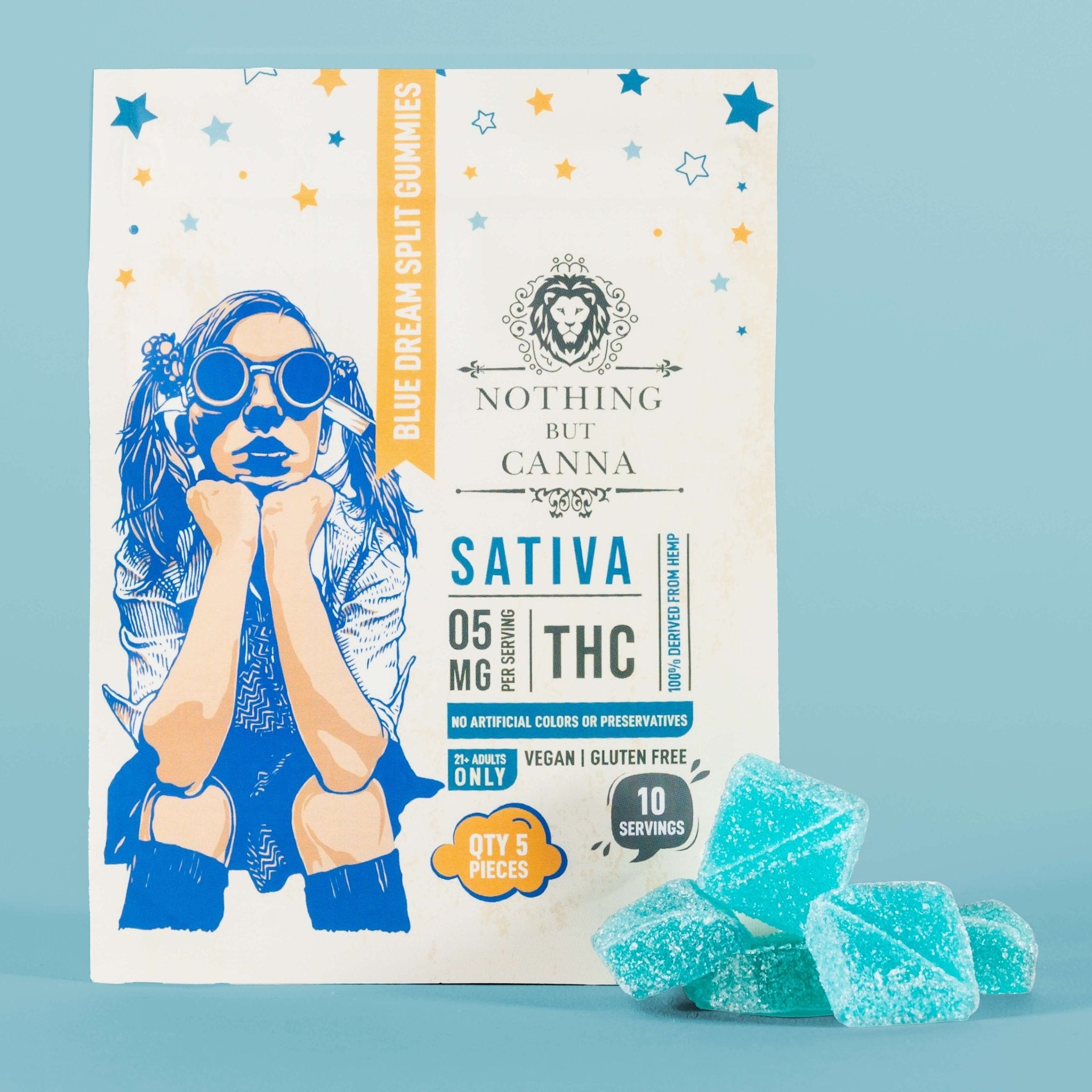
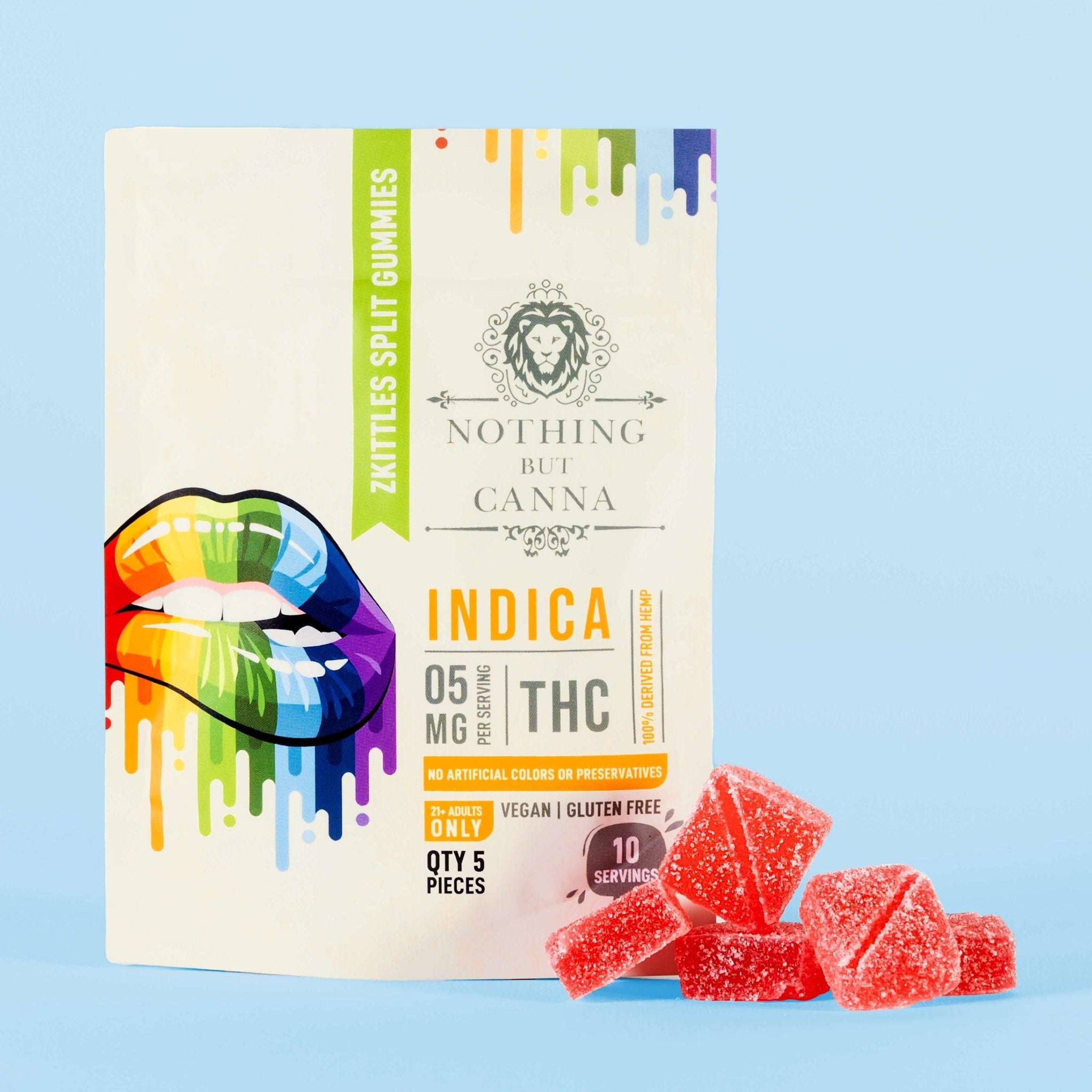
5 mg delta-9 THC per serving Max 50 mg THC per package |
10 servings × 5 mg = 50 mg THC max per package |
| Beverage (single container) | 10 mg delta-9 THC per container | Single-serving container limit |
| CBD | Up to 100 mg per serving | No package-level cap — a 10-serving package can legally contain up to 1,000 mg CBD total |
| CBG | Up to 100 mg per serving | No package-level cap — up to 1,000 mg CBG total in a 10-serving package |
| CBN | Up to 100 mg per serving | No package-level cap — up to 1,000 mg CBN total in a 10-serving package |
| CBC | Up to 100 mg per serving | No package-level cap — up to 1,000 mg CBC total in a 10-serving package |
| CBD+CBG+CBN+CBC combined | Max 400 mg combined per serving | No individual cannabinoid can exceed its own 100 mg/serving limit. A 10-serving package can legally contain up to 4,000 mg combined non-psychoactive cannabinoids total. |
| All other cannabinoids (not THC) | Max 0.5 mg combined per serving | Catch-all cap for unlisted cannabinoids |
Category 2: Natural Hemp Concentrate Pathway
The second pathway for qualifying lower-potency hemp edibles uses a "whole plant" or minimally processed approach:
- Hemp concentrate must be processed or refined without increasing the percentage of targeted cannabinoids or altering the natural cannabinoid ratio beyond recognized processing variability
- Each serving can contain no more than 5 mg of total THC
This pathway is designed for broad-spectrum or full-spectrum extracts that haven't been distilled or isolated in ways that artificially concentrate specific cannabinoids.
4. The New 750ml+ Multi-Serving Beverage Container
Section 107 introduces a brand-new packaging tier for lower-potency hemp edible beverages in resealable, child-resistant bottles of 750ml or more — essentially the "hemp bottle" format. Specific limits for this container type:
| Parameter | Requirement |
|---|---|
| Minimum volume | 750 ml |
| Delta-9 THC per serving | Max 5 mg |
| Maximum servings per container | 17 servings |
| CBD, CBG, CBN, or CBC combined | Max 400 mg total |
| Other cannabinoids | Per OCM-established limit |
| Container type | Resealable, child-resistant required |
From Hemp to Cannabis: How SF 4401 Creates a Real Pathway for Hemp Operators
This is one of the most important — and most misunderstood — parts of SF 4401. Minnesota law does not treat hemp and cannabis as permanently separate silos. Instead, SF 4401 builds a genuine regulatory integration framework that allows compliant hemp operators to expand into licensed cannabis operations. This isn't a loophole or a workaround — it's an intentional policy design, built into the bill across more than a dozen sections.
How the Integration Framework Works: Five Key Mechanisms
Shared Premises Between Hemp and Cannabis Businesses (Section 38 — Minn. Stat. 342.23, Subd. 7 — Effective Jan 1, 2027 | Transfer rules: Aug 1, 2026)
A cannabis business and a hemp business can occupy the same physical location if they share the same majority owners — with each owner holding more than 10% in both businesses. This means a hemp operator who obtains a cannabis license can run both operations under one roof, sharing office space, common areas, and infrastructure, while maintaining separate licensed areas for each regulated activity.
All sales and transport of regulated products between the two businesses on shared premises must be recorded in the statewide monitoring system, and both businesses are jointly liable for any violations at the shared location.
Endorsement-Based Expansion Into Cannabis Operations (Sections 40–54 — Effective Jan 1, 2027)
Once a hemp operator obtains a cannabis license, they can immediately begin applying for the specific endorsements that match what they already do. Endorsements are free — the OCM cannot charge an application fee. This means a hemp extraction company can apply for a cannabis extraction and concentration endorsement. A hemp manufacturer can apply for an edible cannabinoid product handler endorsement. A hemp retailer can apply for a cannabis retail operations endorsement.
The endorsement system is specifically designed so that cannabis license holders can expand activity by activity, rather than having to qualify for everything at once. The skills and infrastructure hemp operators have already built translate directly into the cannabis endorsement framework.
Cannabis Businesses Can Manufacture & Sell Lower-Potency Hemp Edibles (Sections 56–65 — Effective Jan 1, 2027)
SF 4401 explicitly authorizes cannabis microbusinesses and mezzobusinesses to manufacture, package, label, and sell lower-potency hemp edibles alongside adult-use cannabis products. This means hemp products are not left behind when a hemp operator transitions into cannabis — they become part of the product portfolio at the cannabis license level.
Specifically, cannabis microbusinesses (Section 56) and mezzobusinesses (Section 65) are authorized to purchase lower-potency hemp edibles from licensed hemp manufacturers and wholesalers, manufacture their own lower-potency hemp edibles, and sell them to customers at retail. Cannabis retailers (Section 80) can also purchase and sell lower-potency hemp edibles. This integration of hemp products into the cannabis retail framework is one of the clearest signals that the Legislature intended hemp and cannabis to operate as a unified marketplace, not two separate industries.
Ratio Hemp-Infused Cannabis Products: The Bridge Product Category (Section 7 — Effective Jan 1, 2027)
The new ratio hemp-infused cannabis product category (Minn. Stat. 342.01, subd. 63a) is the clearest legislative expression of hemp-cannabis integration. These products combine cannabis extracts with hemp-derived cannabinoids approved by the OCM as nonintoxicating — think a 20:1 CBD-to-THC tincture, or a beverage blending cannabis-derived THC with hemp-derived CBD. They are classified as cannabis products and sold through licensed cannabis retail, but they are built using both hemp and cannabis inputs. Hemp operators who already work with hemp-derived CBD, CBG, CBN, or CBC are uniquely positioned to formulate these products once they hold a cannabis license and the appropriate manufacturing endorsements.
License Reclassification: Growing From Micro to Macro (Section 14 — Minn. Stat. 342.12 — Reclassification Effective Jan 1, 2027)
Once a hemp operator has entered the cannabis market as a microbusiness, they have a clear, structured path to grow into progressively larger license tiers. The reclassification system allows a cannabis microbusiness to petition to become a mezzobusiness, and a mezzobusiness to petition to become a macrobusiness — unlocking larger canopy limits, more manufacturing capacity, more retail locations, and the ability to serve the full medical cannabis market.
Social equity applicants receive priority at each reclassification stage — the number of social equity reclassifications approved must be equal to or greater than non-social equity reclassifications.
The Complete Transition Timeline: Step by Step
-
Now → August 1, 2026: Plan — Do Not Apply Yet
If you currently hold a hemp license, you cannot simultaneously hold a cannabis business license. This period is for planning: evaluate which cannabis license type fits your existing operations, identify which endorsements you will need, assess your ownership structure, and understand the financial and operational requirements. Do not apply for a cannabis license until you are prepared to surrender or let your hemp license expire. Work with legal counsel now so you are ready to move when the time comes.
-
August 1, 2026: Cannabis License Transfer Rules Take Effect
This is the first major date in the transition framework. The formal rules governing how cannabis licenses can be transferred, assigned, or restructured (Minn. Stat. 342.12, Subd. 1) take effect. This matters for hemp operators because: once you obtain a cannabis microbusiness license, these are the rules that govern what you can do with it — transfer it, restructure your entity, or assign it. Social equity cannabis licenses can only transfer to another social equity applicant for the first 3 years. Preliminary license approvals cannot be transferred. If your business entity dissolves, merges, or goes through bankruptcy, a new license must be obtained. Know these rules before you apply.
-
Between August 1, 2026 and January 1, 2027: Surrender Hemp License → Apply for Cannabis License
This is the transition window. Surrender or allow your hemp license to expire, then apply for your cannabis microbusiness license. The OCM has been issuing cannabis licenses since 2024 — the license is available now. You cannot hold both simultaneously, so the hemp license must go first. Once you hold a cannabis license, you are in the system and ready for the integration framework that activates January 1, 2027.
-
January 1, 2027: Full Integration Framework Activates
This is the big date. The shared premises provision, endorsement pathways, hemp edible authorization within cannabis retail, ratio hemp-infused cannabis product category, and reclassification system all take effect. Once you hold your cannabis microbusiness license you can now: apply for cultivation, extraction, manufacturing, and retail endorsements (all free); sell lower-potency hemp edibles through your cannabis retail license; manufacture ratio hemp-infused cannabis products; and operate at the same location as a separately licensed hemp entity under the shared premises provision if a co-owner retains that hemp license.
-
After January 1, 2027: Get Your Medical Cannabis Cultivation Endorsement — The Clock Starts Here
Apply for your medical cannabis cultivation endorsement as soon as possible after January 1, 2027. This is when the 2-year reclassification clock starts — not when you get your microbusiness license, and not August 1, 2026. The clock starts from when you begin actively operating that medical cultivation endorsement.
-
~2 Years After Medical Cultivation Endorsement: Petition for Mezzobusiness
Earliest approximately 2029. Larger canopy, more manufacturing capacity, medical cannabis products, additional retail locations. Social equity applicants get priority in the selection process.
-
~2 More Years After That: Petition for Macrobusiness
Earliest approximately 2031. Up to 38,000 sq ft indoor canopy, up to 8 retail locations, full medical and adult-use market. No more than 8 macrobusiness licenses before January 1, 2030 — so timing and competition for those slots will matter.
What the Integrated Business Looks Like
- Lower-potency hemp edibles only
- CBD, CBG, CBN, CBC products
- 5 mg THC/serving (non-beverage)
- Hemp-derived consumer products
- No adult-use cannabis products
- No medical cannabis access
- Cannot simultaneously hold a cannabis license
- Adult-use cannabis products
- Lower-potency hemp edibles sold through cannabis license
- Ratio hemp-infused cannabis products
- Medical cannabis endorsements available
- Shared premises available if co-owner retains hemp license
- Path to grow to mezzobusiness and macrobusiness
How Product Movement Works Within the Integrated System
Internal Transport Endorsement
To move products between your own licensed facilities, you need an internal transporter endorsement. This requires providing the OCM with detailed vehicle information (make, model, color, VIN, license plate) and complying with all secure transport requirements. Products that can be moved under this endorsement include:
Immature cannabis plants & seedlings Cannabis flower Cannabis products Artificially derived cannabinoids Hemp plant parts Hemp concentrate Lower-potency hemp edibles Hemp-derived consumer products
External Transport Endorsement (Macrobusinesses)
A cannabis macrobusiness with at least two medical cannabis endorsements can also apply for an external transporter endorsement to transport regulated products to other cannabis and hemp businesses — not just its own facilities. A macrobusiness with a medical cannabis endorsement does not need an external transporter endorsement to transport products to a cannabis testing facility.
The 25% Medical Cannabis Cultivation Set-Aside
Once a business holds a medical cannabis cultivation endorsement, at least 25% of all cannabis flower cultivated annually must be sold to a cannabis business with a medical cannabis endorsement. This medical market participation requirement is baked directly into cultivation law and cannot be waived.
"I Own a Hemp License. How Do I Transfer to a Cannabis License?" — Here's Our Read.
This is the question we get asked most. If you personally own a hemp license — a lower-potency hemp edible manufacturer, wholesaler, or retailer license — and you want to move into the cannabis market, here is our honest, careful read of what SF 4401 says about how that works, what the timeline looks like, and where we still need more clarity. This is not legal advice. This is us reading the law together, being transparent about what we understand, and telling you clearly where you need to talk to a qualified cannabis attorney before taking any action.
You Cannot Hold Both Licenses at the Same Time
The bill is unambiguous on this point. A person holding a lower-potency hemp edible manufacturer, wholesaler, or retailer license may not hold a cannabis business license (Minn. Stat. 342.43, subd. 2(d)). This runs both directions — you cannot apply for and receive a cannabis license while your hemp license is active. The transition requires a clean break: you must surrender your hemp license or allow it to expire before a cannabis license can be issued to you.
Your Hemp Products Don't Disappear — They Transfer Through Your Cannabis License
Here is where the integration framework becomes critically important. Once you hold a cannabis microbusiness license, you are explicitly authorized to:
- Purchase lower-potency hemp edibles from licensed hemp manufacturers and wholesalers
- Manufacture your own lower-potency hemp edibles (with the appropriate endorsements)
- Sell lower-potency hemp edibles to customers at your cannabis retail location
- Manufacture and sell ratio hemp-infused cannabis products — the new bridge product category combining cannabis extracts with hemp-derived cannabinoids
The license changes. The products do not have to. Your existing hemp product lines — your edibles, your beverages, your tinctures — can continue to reach customers through your cannabis license.
When Does This Actually Happen?
Based on our read of the bill, here is the timeline as we understand it:
| When | What Happens |
|---|---|
| Now | Plan — do not apply yet. Understand the process, get legal counsel, evaluate your ownership structure, and determine which cannabis license type fits your operations. Do not apply for a cannabis license while your hemp license is active. |
| August 1, 2026 | Cannabis license transfer rules take effect (Minn. Stat. 342.12, Subd. 1). The formal rules governing how cannabis licenses can be transferred, assigned, or restructured are now law. Social equity licenses restricted for 3 years. No transfer of preliminary approvals. New license required after mergers/dissolution/bankruptcy. Know these rules before you apply — they govern what you can do with your cannabis license once you hold it. This is also the time to finalize your plan and begin the process of surrendering your hemp license. |
| Aug 1 → Jan 1, 2027 | Transition window. Surrender or allow your hemp license to expire. Apply for your cannabis microbusiness license. The OCM has been issuing cannabis licenses since 2024 — the license is available now, but you cannot hold both simultaneously. The hemp license must go first. |
| January 1, 2027 | Full integration framework activates. You can now sell lower-potency hemp edibles through your cannabis retail license. Apply for endorsements matching your existing operations — extraction, manufacturing, edible handler, retail — all free. Shared premises provision activates. Ratio hemp-infused cannabis products authorized. Reclassification system opens. |
| After Jan 1, 2027 | Apply for your medical cannabis cultivation endorsement immediately. This is when the 2-year reclassification clock starts — not August 1, not when you got your microbusiness license. The clock starts from active operation of this endorsement. |
| ~2029 | Petition to reclassify as a cannabis mezzobusiness — larger canopy, more manufacturing capacity, medical cannabis products, additional retail locations. |
| ~2031 | Petition to reclassify as a cannabis macrobusiness — up to 38,000 sq ft canopy, up to 8 retail locations, full medical and adult-use market. No more than 8 macrobusiness licenses before January 1, 2030. |
Can You Keep Any Hemp Operations Going Alongside Your Cannabis License?
This is where we need more clarity, and we want to be honest about that. Here is our read:
You personally cannot hold both licenses. That is clear. But the shared premises provision (Section 38) opens a possible path: if a business partner or co-owner holds the hemp license through a separate legal entity, and both entities share majority owners each holding more than 10% in both businesses, those two businesses can operate at the same physical location.
In theory, this means your hemp operation could continue alongside your cannabis operation — through a carefully structured separate entity. The cannabis entity would be yours. The hemp entity would require a co-owner holding that license.
But we are not certain how the OCM will interpret overlapping ownership for sole owners, what exactly qualifies as shared majority ownership across different business structures, and whether there are additional restrictions we are not yet seeing. This is not a decision to make without legal guidance.
SF 4401 creates a genuine, structured pathway for hemp license holders to transition into the cannabis market. The pathway is real. The intent of the Legislature is clear. And for hemp operators who have built their business around compliant cannabinoid products, the transition is designed to carry your product knowledge, your equipment, and your customer relationships forward into the cannabis system.
The core of the transition as we read it: surrender your hemp license → obtain a cannabis microbusiness license → access the integration framework on January 1, 2027 → sell your hemp products through your cannabis license → build toward reclassification.
We are still seeking clarity on the exact surrender and transition process, how the OCM will handle concurrent applications, and how ownership structures work for sole owners who want to maintain any hemp operations alongside their cannabis license. These are the exact questions our lobbying team at Larkin Hoffman will be bringing to the OCM and the Legislature on our behalf, and that our legal counsel will be working through as implementation guidance is issued. We will update this resource as those answers become clear.
Until then — this is our read, not legal advice. Talk to a qualified cannabis attorney before you make any moves on your license. We are committed to being your most informed, honest voice through this transition — and we are not going to pretend we have all the answers when the rules are still being written.
The Medical Cannabis Revolution: New Endorsements, New Products, New Access
SF 4401 fundamentally restructures how medical cannabis is grown, manufactured, dispensed, and delivered in Minnesota. The old system — dominated by a handful of medical cannabis combination businesses — is replaced by a distributed endorsement model where microbusinesses, mezzobusinesses, cultivators, and retailers can all participate in the medical market.
The Three New Medical Cannabis Endorsements
1. Medical Cannabis Cultivation Endorsement
Available to microbusinesses, mezzobusinesses, macrobusinesses, and cultivators that already hold a cannabis cultivation endorsement.
| License Type | Additional Indoor Canopy | Additional Outdoor |
|---|---|---|
| Cannabis Microbusiness | +1,000 sq ft | +¼ acre |
| Cannabis Mezzobusiness | +3,000 sq ft | +½ acre |
| Cannabis Cultivator | +6,000 sq ft | +1 acre |
| Cannabis Macrobusiness (base) | Up to 38,000 sq ft | Up to 1 acre |
Macrobusinesses can earn additional canopy after each license renewal: +2,000 sq ft after the first, +2,000 sq ft after the second, and +3,000 sq ft after the third renewal — assuming good standing with the OCM.
2. Medical Cannabis Manufacturer Endorsement
Allows a business to manufacture medical cannabinoid products. The updated bill significantly simplified the definition of "medical cannabinoid product" — removing the prescriptive list of required forms (pills, oils, gummies, etc.) and instead defining it simply as a cannabis product provided to a registered patient, visiting patient, designated caregiver, or parent/guardian/spouse of an enrolled patient to treat or alleviate symptoms of a qualifying medical condition. This gives the OCM more flexibility to approve new product forms by rule rather than requiring legislative action. Key requirements for the manufacturer endorsement:
- Must already hold a cannabis extraction and concentration endorsement, hemp extraction and concentration endorsement, or creation of artificially derived cannabinoids endorsement
- Must manufacture high medical need products identified by the OCM
- Can only sell medical cannabinoid products to other cannabis businesses with a medical cannabis manufacturer or retail endorsement
- Every medical cannabinoid product must carry a "Minnesota Medical Cannabis" warning symbol
- Can only be sold to registered patients, caregivers, or visiting patients
3. Medical Cannabis Retail Endorsement
Where medical cannabis meets patients on the ground. Requirements include:
- Must employ or contract with a medical cannabis consultant (OCM-certified) or a licensed pharmacist
- Registered patients and caregivers must receive priority service
- Must carry all high medical need products identified by the OCM at minimum: pills, water-soluble multiparticulates (granules, powder, sprinkles), orally dissolvable products (lozenges, gum, mints, buccal and sublingual tablets), and tinctures
- High medical need products must be available within 24 hours of a patient request — failure to comply can result in suspension or revocation
Additional Retail Locations for Medical Endorsement Holders
| License Type | Additional Medical Locations | Condition |
|---|---|---|
| Microbusiness | +1 location | At least 1 in high medical need area |
| Mezzobusiness | +2 locations | At least 2 in high medical need areas |
| Cannabis Retailer | +3 locations | 3 in high medical need areas |
| Macrobusiness | Up to 8 total | 3+ must be in high medical need areas if operating 5+ |
Medical Cannabis Delivery Endorsement
Cannabis macrobusinesses with a medical cannabis retail endorsement — and cannabis delivery license holders — can now apply for a medical cannabis delivery endorsement to deliver medical cannabis flower and medical cannabinoid products directly to patients, registered caregivers, and parents, legal guardians, and spouses of enrolled patients.
"The expansion of medical cannabis delivery is one of the most patient-friendly provisions in this entire bill. For patients with mobility limitations, serious illness, or who live far from a dispensary, home delivery of medical cannabis is not a luxury — it's an essential access point. This is a direct result of patient advocates showing up as part of those 80+ stakeholders."
— Nothing But Canna Editorial Team
What's on the Label: New Requirements That Will Change Every Package
SF 4401 delivers the most comprehensive labeling overhaul in Minnesota hemp and cannabis history. If you're a consumer, these changes mean more information and clearer warnings. If you're a retailer or manufacturer, these changes mean compliance deadlines you must meet.
Cannabis Flower Labels (Section 108)
All cannabis flower and hemp-derived consumer products consisting primarily of hemp plant parts must now include:
- Name and license number of the cultivator
- Net weight, batch number, cannabinoid profile
- OCM universal symbol
- Testing verification under section 342.61
- NEW: Type of product including directions on usage
- NEW: OCM warning symbol — "not for children" + Minnesota Poison Control Center information (replacing the old "Keep this product out of reach of children" statement)
Cannabis & Cannabinoid Product Labels (Section 109) — Effective August 1, 2026
| # | Required Label Element | Status |
|---|---|---|
| 1 | Name and license number of manufacturer(s) | Existing + Updated |
| 2 | Net weight of product | Existing |
| 3 | Type of product including directions on usage | Updated |
| 4 | Batch number | Existing |
| 5 | Serving size | Existing |
| 6 | Cannabinoid profile per serving and total | Existing |
| 7 | List of ingredients | Existing |
| 8 | Universal OCM symbol (contains cannabis/THC) | Existing |
| 9 | Warning symbol: "not for children" + Poison Control Center info | Simplified & Updated |
| 10 | Testing verification under section 342.61 | Existing |
| 11 | Any other OCM-required information | Existing |
Brand-New: Dedicated Lower-Potency Hemp Edible Labels (Section 113)
For the first time, there is a labeling section specifically for lower-potency hemp edibles. Every product must include:
- Cultivator information (name + address + country/state, OR name + license number)
- Manufacturer of hemp concentrate and artificially derived cannabinoids (name + address + country/state, OR name + license number)
- Net weight
- Batch number
- Serving size
- Cannabinoid profile per serving and total THC
- List of ingredients
- Universal OCM symbol (for THC-containing products)
- Warning symbol: "not for children" + Poison Control Center info
- Testing verification under section 342.61
- Directions on usage
- Any other OCM-required information
Two important exceptions: (1) Supply chain info for cultivator/manufacturer can be disclosed via a scannable barcode if accurate and always active. (2) Products containing only nonintoxicating cannabinoids with no THC are not required to include the universal THC symbol.
Hemp-Derived Topical Products: New Two-Tier Label System (Section 111)
- All topicals: manufacturer name/location/phone/website, lab name and address, net weight/volume, product type, cannabinoid amounts per serving and total, ingredient list, FDA disclaimer, and any OCM-required info
- THC-containing topicals (additional): THC amount per serving and total, OCM universal THC symbol, OCM "not for children" warning with Poison Control info, and testing verification
The Complete Fee Schedule: What It Costs to Operate in Minnesota's New Cannabis Landscape
Section 13 (Minn. Stat. 342.11) establishes or updates the fee schedule for every license type. A key structural change: the initial license fee covers the first year, and the renewal fee only begins at the second renewal. Endorsements are free — the OCM may not charge any application fee for endorsements (Section 39).
| License Type | Application | Initial License | Renewal (2nd+) |
|---|---|---|---|
| Cannabis Microbusiness | $500 | $0 | $2,000 |
| Cannabis Mezzobusiness | $5,000 | $5,000 | $10,000 |
| Cannabis Cultivator | $10,000 | $20,000 | $30,000 |
| Cannabis Manufacturer | $10,000 | $10,000 | $20,000 |
| Cannabis Retailer | $2,500 | $2,500 | $5,000 |
| Cannabis Wholesaler | $5,000 | $5,000 | $10,000 |
| Cannabis Transporter | $250 | $500 | $1,000 |
| Cannabis Testing Facility | $5,000 | $5,000 | $10,000 |
| Cannabis Delivery Service | $250 | $500 | $1,000 |
| Cannabis Event Organizer | $750 | $0 ← Changed from $750 | $750 + $750/event |
| Lower-Potency Hemp Edible Manufacturer | $250 | $1,000 | $1,000 |
| Lower-Potency Hemp Edible Wholesaler | $250 | $10,000 | $10,000 |
| Lower-Potency Hemp Edible Retailer | $250/location | $250/location | $250/location |
| Cannabis Macrobusiness | $10,000 | $20,000 | $70,000 |
What Local Governments Can (and Can't) Do Under the New Rules
Section 15 rewrites the local control provisions (Minn. Stat. 342.13). Local governments keep meaningful authority over time, place, and manner — but the OCM's compliance and licensing authority is strengthened.
What Local Governments Can Still Do
- Adopt reasonable restrictions on hours, location, and manner of operation
- Prohibit cannabis businesses within 1,000 feet of a school
- Prohibit cannabis businesses within 500 feet of a day care, residential treatment facility, or minor-attracting public park attractions (playgrounds, athletic fields)
- Require retail registrations and conduct compliance checks
- Impose civil penalties up to $2,000 per violation for selling without a valid retail registration
- Limit cannabis retailers to no fewer than 1 per 12,500 residents
Critical Change: Local Certification Language
Under the old law, the OCM could not issue a license if a local government said the business didn't comply with zoning. Under SF 4401, the language tightens: the OCM must not issue a license when a local government submits evidence of non-compliance. However, if the local government fails to respond within 30 days of receiving the application, the OCM may waive the local certification requirement and issue the license.
Expedited Complaint Process
The OCM must provide an initial response to local government complaints within 7 days and complete any necessary inspections within 30 days. For immediate threats to public health or safety: response required within one business day.
Your Monitoring System Data Is Now Protected — and Test Results Must Be Public
Section 29 adds a new clause to non-public data maintained by the OCM: data reported to the office using the statewide monitoring system. This takes effect the day following final enactment. The statewide monitoring system tracks seed-to-sale data across every licensed business — competitors, third parties, and the public cannot request this information under the Minnesota Government Data Practices Act.
Psilocybin on the Horizon: What Section 116 Means for Minnesota
Section 116 requires the OCM to publish a report by January 15, 2027, with recommendations on administering a psilocybin therapeutic use program in Minnesota — allowing individuals 21 and older with qualifying medical conditions to access psilocybin under the supervision of a facilitator at a treatment facility.
The report must be informed by the Minnesota Psychedelic Medicine Task Force's Legislative Report (January 1, 2025), assess program feasibility, describe methods for identifying qualifying conditions, and include recommendations for program development.
Your SF 4401 Compliance Roadmap: What Changes and When
SF 4401 does not take effect all at once. Different provisions have different effective dates — and knowing exactly when each change kicks in is critical for businesses and consumers alike. Here is every date, every provision, laid out clearly.
These provisions go live the moment the Governor signs the bill into law:
- Minnesota Statutes §151.72 fully repealed — the original pharmacy board statute governing hemp-derived edible cannabinoid products is entirely repealed. The OCM becomes the sole regulator of hemp edibles in Minnesota. The dual-regulatory structure that existed since hemp edibles first became legal is gone. All hemp edible regulation now lives exclusively under Chapter 342.
- Statewide monitoring system data classified as nonpublic — seed-to-sale tracking data reported to the OCM is no longer accessible to the public or competitors under the Minnesota Government Data Practices Act
- Cannabis transport to testing facility (Section 89) — cannabis microbusinesses, mezzobusinesses, cultivators, and manufacturers may transport samples of their own products to a cannabis testing facility for testing without a full transporter license, provided they meet vehicle and manifest requirements. This provision expires February 1, 2029.
- On-site consumption updates — lower-potency hemp edible retailers with an on-site consumption endorsement may sell and permit consumption of hemp beverages at off-site events if local government has authorized the event, the event organizer holds an on-sale liquor license, and the event does not exceed four days
- Qualified applicant status rules updated — qualified applicant status now expires after six months; for applicants who achieved qualified status before June 1, 2026, status expires January 1, 2027
- Ownership disqualification requirements updated — general cannabis business ownership requirements updated (Minn. Stat. 342.16)
- Financial relationship rules updated — the prohibition on financial relationships between cannabis and hemp businesses is clarified and restructured, including a new explicit carve-out for good-faith transactions at fair market value
- Medical product delivery to under-21 patients — cannabis businesses may not distribute, sell, or deliver vaporized medical cannabis products to patients under 21 years of age (paragraph (c) of subdivision 2)
These provisions are the general effective date for sections of SF 4401 that do not carry a specific effective date, plus a handful of named provisions:
- License transfer rules take effect — Minn. Stat. 342.12, Subdivision 1 — this is a critical date for hemp operators planning their transition. The rules governing when and how cannabis licenses may be freely transferred, when social equity license restrictions apply (social equity licenses can only transfer to another social equity applicant for the first 3 years), when preliminary approval cannot be transferred, and when a new license must be obtained (e.g., after dissolution, merger, restructuring, or bankruptcy) all take effect August 1, 2026. Note: this is the transfer/assignment rules for cannabis licenses already in existence — not the reclassification pathway from micro to mezzo to macro, which is January 1, 2027.
- Cannabinoid product label content changes — paragraph (a) (Section 109) — the updated list of required label elements for cannabis products, lower-potency hemp edibles, hemp concentrate, hemp-derived consumer products, medical cannabinoid products, and hemp-derived topical products takes effect. This means updated label requirements for:
- Streamlined manufacturer name and license number requirements
- Updated "type of product including directions on usage" requirement
- New warning symbol standard — OCM "not for children" symbol + Poison Control Center info — replacing the old "Keep this product out of reach of children" statement
- Consolidated label element numbering
- General default effective date — all sections of SF 4401 that do not carry a specific effective date are effective August 1, 2026, unless they relate to the creation of the cannabis macrobusiness or conversion of medical cannabis combination businesses, which are effective January 1, 2027
This is when the vast majority of SF 4401's structural changes take effect. January 1, 2027 is the single most important compliance deadline in the entire bill. Here is every provision effective on this date:
Licensing Structure
- Cannabis macrobusiness license created — the new top-tier cannabis license (Minn. Stat. 342.295, renumbered from 342.515) replaces the medical cannabis combination business license. No more than 8 macrobusiness licenses may be issued before January 1, 2030.
- All existing medical cannabis combination business licenses automatically converted to cannabis macrobusiness licenses by the OCM
- Updated license type list takes effect — "medical cannabis combination business" is removed from the list of license types and replaced with "cannabis macrobusiness" (Minn. Stat. 342.10)
- New fee schedule takes effect — including the $70,000 macrobusiness renewal fee and the $0 initial fee for cannabis event organizers (Minn. Stat. 342.11)
- Reclassification system activates — cannabis microbusinesses may begin petitioning to reclassify as mezzobusinesses; cannabis mezzobusinesses may begin petitioning to reclassify as macrobusinesses (Minn. Stat. 342.12, Subdivisions 2–6)
- Vertical integration prohibition updated — references updated from "medical cannabis combination business" to "macrobusiness" (Minn. Stat. 342.18, subd. 2)
- Social equity license classification updated — macrobusiness now included in the list of licenses that must be classified as available to social equity applicants (Minn. Stat. 342.175)
- Home extraction prohibition updated — references updated to include macrobusiness license (Minn. Stat. 342.09, subd. 3)
New Product Categories
- Ratio hemp-infused cannabis products officially created as a defined product category (Minn. Stat. 342.01, subd. 63a) and added to the definition of "cannabis product"
- Lower-potency hemp edible milligram thresholds fully restructured — new potency tiers for CBD/CBG/CBN/CBC (up to 100 mg each, 400 mg combined), updated 20:1 artificially derived cannabinoid ratio requirement, and new 750ml+ multi-serving beverage container format (Minn. Stat. 342.01, subd. 50)
- Updated definitions for "cannabis business," "license holder," "cannabis product," "medical cannabinoid product," and "medical cannabis flower" all take effect, replacing references to "medical cannabis combination business" with "macrobusiness" throughout
Medical Cannabis Endorsements
- Medical cannabis cultivation endorsement created — available to microbusinesses, mezzobusinesses, macrobusinesses, and cultivators with additional canopy allowances by license tier
- Medical cannabis manufacturer endorsement created — allows qualifying cannabis businesses to manufacture and sell medical cannabinoid products; must carry high medical need products
- Medical cannabis retail endorsement created — allows qualifying cannabis retailers to serve registered patients; requires medical cannabis consultant or pharmacist on staff; must carry all high medical need products within 24 hours of patient request
- Medical cannabis delivery endorsement created — allows macrobusinesses with a medical retail endorsement and cannabis delivery license holders to deliver medical cannabis flower and medical cannabinoid products to patients and caregivers
- Medical cannabis microbusiness and mezzobusiness endorsements — microbusinesses and mezzobusinesses can now apply for medical cultivation, manufacturing, and retail endorsements with expanded canopy and additional retail location allowances
- OCM enforcement of medical endorsements takes effect — OCM may suspend or revoke a medical cannabis endorsement for failure to maintain high medical need product availability
Endorsement Framework
- New general endorsement procedures statute created (Minn. Stat. 342.245) — establishes that endorsement applications are free, endorsement terms align with license terms, and grounds for denial
- Cannabis cultivation endorsement — now explicitly required (not just implied) for any cannabis business seeking to cultivate; available to microbusinesses, mezzobusinesses, macrobusinesses, and cultivators
- Cannabis extraction and concentration endorsement, hemp extraction and concentration endorsement, and creation of artificially derived cannabinoids endorsement — each now a distinct, separately required endorsement rather than a combined process; a hemp extraction endorsement is prerequisite for a creation of artificially derived cannabinoids endorsement
- Production of consumer products endorsement and edible cannabinoid product handler endorsement — now each explicitly required before conducting those manufacturing activities
- Cannabis retail operations endorsement — now explicitly required for any business seeking to conduct retail sales
- Cannabis flower packaging endorsement — new endorsement allowing businesses with a retail operations endorsement to package cannabis flower at the point of sale rather than requiring pre-packaging
- Internal transporter endorsement — now the formal mechanism for microbusinesses, mezzobusinesses, and macrobusinesses to transport products between their own facilities
- External transporter endorsement for macrobusinesses — macrobusinesses with at least two medical cannabis endorsements may transport products to other cannabis and hemp businesses
- Lower-potency hemp edible extraction and artificially derived cannabinoid endorsements — now explicitly required for hemp edible manufacturers seeking to perform those activities (Minn. Stat. 342.45)
Labeling
- Ratio hemp-infused cannabis product required label statement — every ratio product must include: "This product contains nonintoxicating cannabinoids derived from hemp." (Section 109, paragraph (b))
- Dedicated lower-potency hemp edible label section takes effect (Minn. Stat. 342.63, subd. 7) — full list of 12 required label elements for all lower-potency hemp edible products, including cultivator and manufacturer identification, batch number, cannabinoid profile per serving, testing verification, and usage directions
- Cannabis flower packaging endorsement labeling requirements — businesses with the new endorsement must comply with all packaging and labeling requirements at the point of sale
- Additional information requirements updated for cannabis microbusinesses, mezzobusinesses, retailers, and macrobusinesses serving customers (Minn. Stat. 342.63, subd. 6)
Local Government & Retail Registration
- Retail registration requirements updated — macrobusiness replaces medical cannabis combination business in all retail registration provisions; cannabis businesses must register with the local city, town, or county before making retail sales (Minn. Stat. 342.22, subdivisions 1, 3, and 5)
- Registration suspension and penalty provisions updated — civil penalty of up to $2,000 per sale without a valid retail registration; macrobusiness referenced throughout
- Local government zoning certification language strengthened — OCM must not (not "may not") issue a license when a local government submits evidence of non-compliance
Testing & Compliance
- Testing requirements updated — all references to "medical cannabis combination business" replaced with "macrobusiness" in testing submission and disclosure requirements (Minn. Stat. 342.61, subd. 4)
- Test results public access requirement updated — macrobusiness must make test results available to the public upon request in plain language; five-year retention requirement (Minn. Stat. 342.61, subd. 5)
- Priority testing for high medical need products — cannabis testing facilities may establish processes to prioritize testing of high medical need products (Minn. Stat. 342.61, subd. 6)
Events & Delivery
- Cannabis event organizer licensing restructured — initial license fee reduced to $0; temporary event application process moved to a site registration model; attestation requirement for organizers with 10+ employees (Minn. Stat. 342.39)
- Temporary cannabis event site registration requirements updated — organizer must submit event layout, vendor list, dates, and local approval evidence to the OCM for each event (Minn. Stat. 342.40)
- Cannabis delivery service authorized actions updated — macrobusiness replaces medical cannabis combination business as a source from which delivery services may purchase products (Minn. Stat. 342.41)
- Retail sale prohibition added — cannabis businesses with a retail endorsement may not sell medical cannabinoid products to persons not registered in the patient registry (Minn. Stat. 342.27, subd. 12)
License Issuance Caps
- Maximum license cap deadline extended — the date before which the OCM may issue up to the maximum number of cultivator, manufacturer, retailer, and mezzobusiness licenses is extended from July 1, 2026 to July 1, 2027 (Minn. Stat. 342.14, subd. 1b)
- Post-cap license determination moved to July 1, 2027 — beginning July 1, 2027, the OCM must determine how many of those license types to issue going forward, with social equity allocations equal to or greater than general applicant allocations
- January 15, 2027 — OCM must submit psilocybin therapeutic use program feasibility report to the Legislature
- February 1, 2029 — The self-transport to testing facility provision (Section 89) expires; cannabis businesses must use licensed transporters for testing samples after this date
- January 1, 2030 — The cap of no more than 8 cannabis macrobusiness licenses expires; the OCM may issue additional macrobusiness licenses after this date
A Bill Built by a Community — and What It Means for You
SF 4401 didn't pass because of a few well-connected insiders. It passed because more than 80 stakeholders — hemp farmers, patient advocates, social equity applicants, retailers, cultivators, legal experts, and industry organizations — showed up consistently, spoke clearly, and refused to let the hemp and medical cannabis communities be afterthoughts in a bill focused on adult-use cannabis. Nothing But Canna (formerly Nothing But Hemp) was honored to be one of those voices at the table.
We also want to take this moment to genuinely and sincerely thank our lobbying partners at Larkin Hoffman. From navigating committee hearings to advocating for the specific provisions that protect hemp businesses and medical patients, their work representing our community at the Capitol was extraordinary. If you've ever benefited from a hemp product being legally available in Minnesota, some of that credit belongs to the team at Larkin Hoffman. We are deeply grateful.
For our customers at Nothing But Canna (formerly Nothing But Hemp), the message is this: the products you love are not going away. Lower-potency hemp edibles remain a protected and vibrant category. The milligram limits have been refined, not dramatically reduced for most products. New labeling requirements will actually make it easier to understand what you're consuming. And test results being public on request is a consumer protection we fully support.
For hemp operators who have been watching the cannabis market and wondering when their moment comes — January 1, 2027 is the date. That is when the full integration framework takes effect: shared premises, endorsement pathways, hemp edibles within cannabis retail, ratio hemp-infused cannabis products, and the reclassification system that lets a microbusiness grow into a mezzobusiness and eventually a macrobusiness. The skills, equipment, customer relationships, and product knowledge you've built in the hemp market carry forward directly into cannabis. You don't have to start over — you have to scale up.
And for hemp business owners navigating what this transition looks like in practice — which license to apply for, which endorsements to prioritize, how to structure shared premises, how to time a reclassification petition — we recommend working with a qualified cannabis attorney. For legislative advocacy and future policy shaping, Larkin Hoffman continues to be the gold standard, and we are proud to have them representing Minnesota's hemp community at the Capitol.
We'll be monitoring implementation closely, attending OCM rulemaking sessions, and updating this resource as the January 1, 2027 effective date approaches. Nothing But Canna (formerly Nothing But Hemp) remains committed to being the most knowledgeable, honest, and transparent voice in Minnesota cannabis and hemp. As always — nothing but the real stuff.
Questions About How SF 4401 Affects You?
Our team at Nothing But Canna (formerly Nothing But Hemp) is here to help you navigate what these changes mean for your purchases, your business, or your access to medical cannabis. Stop by any of our locations, shop online, or reach out directly — we're Minnesota's cannabis and hemp home.
Shop Nothing But Canna

